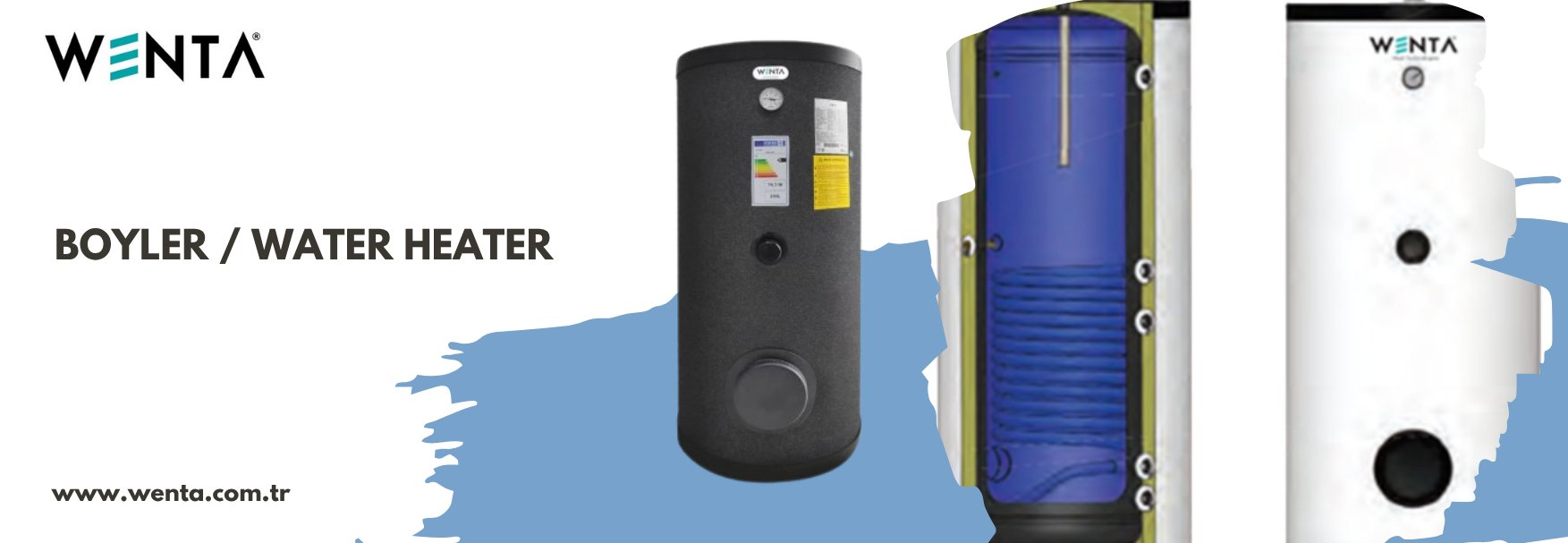
How to Select an Industrial Water Heater Tank (Boiler)?
(Efficient, Hygienic, and Long-Lasting System Guide)
Industrial water heater tanks (boilers), widely used in applications ranging from industrial facilities to hotels, hospitals, and manufacturing plants, are at the core of domestic hot water systems. However, today, selecting a boiler is no longer limited to the basic function of “heating and storing water.”
The “invisible architect” in our buildings is usually only noticed when the water turns cold. Yet this silent hero directly determines approximately 30% of your monthly energy bill. Operating quietly in basements or mechanical rooms of modern buildings, today’s boilers have evolved beyond simple “water storage tanks” into hybrid energy hubs where heat pumps, solar thermal collectors, and condensing systems are integrated and managed together. The engineering behind this technology, which protects both your comfort and your budget, represents far more than just a water tank.
In this article, we will examine in detail the working principles, application areas, technical specifications, and correct tank selection criteria for boiler systems.
How Does a Boiler (Hot Water Storage Tank) Work?
Boilers fundamentally operate as storage systems based on a heat exchanger principle. Water is heated via an internal coil (serpentine heat exchanger) or an external heat source and stored within the tank.
Working principle:
- The hot fluid from the heat source flows through the coil
- Heat is transferred from the coil surface to the domestic water
- Heated water is stored inside the tank
- Water is delivered to the system when needed
Thanks to this structure:
- Instant hot water demand is met
- The system operates steadily
- Energy sources are used more efficiently
A modern boiler system must simultaneously meet multiple parameters:
- Energy efficiency
- Hygienic safety
- Compatibility with multiple heat sources
- Long service life and low operating costs
Therefore, selecting the right boiler requires a holistic engineering approach.
How to Determine Boiler Capacity?
The foundation of proper boiler selection is determining the correct capacity based on demand.
Key parameters:
- Number of users / process demand
- Simultaneous usage rate
- Peak consumption values
- Daily hot water consumption
Incorrect capacity selection leads to:
- Insufficient hot water (loss of comfort)
- Oversized volume (energy inefficiency and losses)
Hygiene in Boiler Systems and Legionella Risk
One of the most critical issues in hot water systems is the risk of Legionella bacteria.
- Proliferates rapidly between 20°C – 45°C
- Develops in stagnant water zones
- Can cause serious health issues when transmitted via inhalation
This risk must be strictly controlled, especially in hotels, hospitals, and large-scale facilities.
Critical Design Factors to Prevent Legionella
1. Stable Operation at High Temperatures
Operating the system at ≥60°C is the most fundamental factor in preventing Legionella growth. However, the key is not only reaching this temperature but maintaining it uniformly throughout the tank.
2. Coil Design and Connection Geometry
The internal heat exchanger (coil) is not only a heating element but also a critical hygienic component.
A properly designed coil system:
- Prevents dead zones inside the tank
- Ensures full water circulation
- Provides homogeneous temperature distribution
Correct inlet-outlet positioning:
- Eliminates stagnant regions
- Minimizes stratification
This directly reduces Legionella risk.
3. Importance of Recirculation Systems
Continuous recirculation is another key factor:
- Prevents water stagnation
- Maintains temperature continuity across the system
- Minimizes dead legs
Systems without recirculation lines pose a high risk, especially in large facilities.
4. Enamel Coating and Hygienic Surface Technology
The enamel coating used on the inner surface of the tank is crucial for hygiene and durability.
Advantages:
- High corrosion resistance
- Reduces bacterial adhesion
- Preserves water quality
- Ensures long service life
It is especially preferred in hygiene-critical applications such as food, healthcare, and hospitality.
5. Anode Protection: A Key Factor for Tank Lifespan
Enamel coating alone is not sufficient. A magnesium anode rod is used to protect against electrochemical reactions inside the tank.
Benefits:
- Actively prevents corrosion
- Significantly extends tank life
- Supports enamel protection
- Reduces maintenance costs
Compatibility with Energy Sources: Flexible and Efficient Design
Modern boiler systems must be designed to integrate with multiple heat sources.
1. Integration with Heat Pumps
Since heat pumps operate at low temperatures:
- Large surface area coils are required
- High heat transfer efficiency becomes critical
Without proper design, system efficiency drops significantly.
2. Solar Thermal Systems
In solar applications:
- A second coil or special connection design is required
- Maximum energy gain is targeted even at low temperatures
Compatibility with solar systems optimizes renewable energy use.
3. Integration with Condensing Systems
Condensing boilers operate more efficiently at low return temperatures.
Therefore, the storage tank must be designed in a way that does not reduce condensing efficiency.
4. Conventional Boiler Systems
In high-temperature systems:
- Faster heating
- More compact coil designs
become advantageous.
5. Automation and Smart Control Systems
Modern boiler systems achieve maximum efficiency when integrated with automation.
Benefits:
- Precise temperature control
- Optimized energy consumption
- Synchronization of multiple heat sources
- Remote monitoring and control
Heat Loss and Insulation: The Key to Energy Efficiency
One of the most critical factors affecting efficiency is insulation quality.
High-quality insulation:
- Minimizes heat losses
- Reduces energy consumption
- Maintains water temperature for longer
- Improves overall system efficiency
Poor insulation results in:
- Continuous reheating needs
- High operating costs
- Unstable temperature profiles
Pressure Resistance and Structural Quality
Since boilers are classified as pressure vessels:
- High-quality steel
- Reliable welding technology
- Compliance with standards are essential.
These factors ensure:
- Long service life
- Safe operation
- Reduced maintenance costs
Maintenance and Long-Term Performance
Regular maintenance is essential to maintain boiler performance.
Recommended practices:
- Anode inspection and replacement
- Internal surface inspection
- Scale (limescale) cleaning
- Safety equipment checks
Benefits of regular maintenance:
- Sustained energy efficiency
- Reduced failure risk
- Extended system lifespan
Conclusion: правильный Boiler Selection = Efficiency + Hygiene + Safety
Selecting the right boiler is not just a technical decision; it is a strategic one that directly affects energy efficiency, hygiene standards, and operational sustainability.
Key criteria:
- Hygienic design against Legionella
- High-quality enamel coating
- Coil and connection engineering
- Compatibility with multiple heat sources
- High insulation performance must all be evaluated together.
More Information and Product Selection
To identify the most suitable, high-efficiency, and hygienic boiler solutions for your project, you can review our product pages or contact our expert team for project-specific engineering support.